
Chances are you are trying to eat healthier this year. And updated food labels may make it easier.
The Food and Drug Administration (FDA) requires food and beverage packages to display a Nutrition Facts label, which lists details about the contents, including serving size, number of servings per package, calories, grams of fat, carbohydrates, protein, and other nutrients. This information can help you decide whether you approve of what you’re getting, and it keeps food manufacturers honest about what they’re selling you.
For the first time in about a quarter of a century, the FDA has updated the Nutrition Facts labels on food packages. I’m not talking about changes in the nutritional content of the foods themselves. I’m referring to changes in the way the content is presented to you. I applaud most of these changes and hope that they can help you eat better.
The new labels made their debut January 1, 2020 for food products produced by large food companies with more than $10 million in sales. Smaller food companies have an extra year to comply.
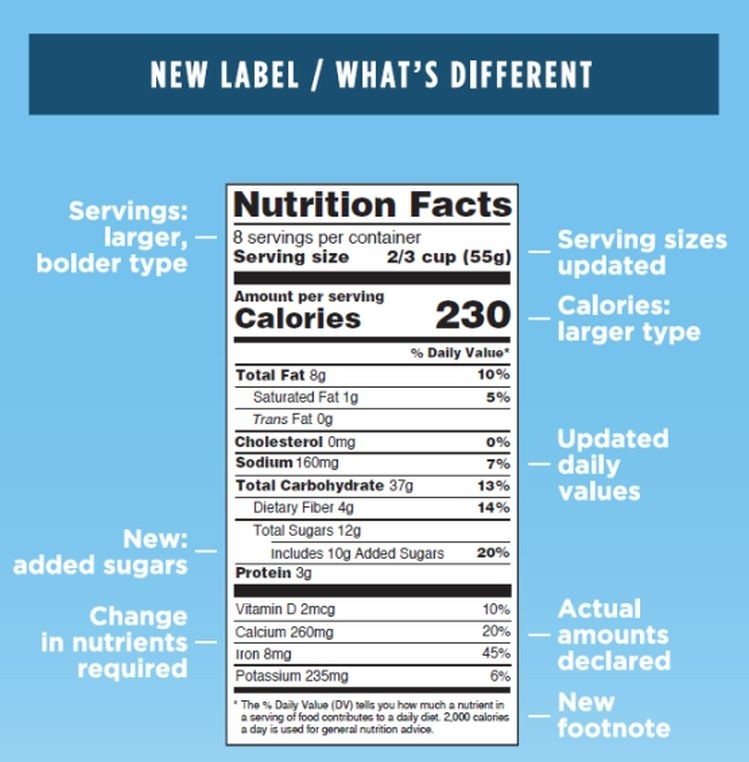
Here are some of the key changes you can expect to see.
Nearly 20 percent of the serving sizes have changed—and most of them are bigger. For example, the serving size of ice cream increased from ½ cup to 2/3 cup and soft drinks went from 8 ounces to 12 ounces, while yogurt decreased from 8 ounces to 6 ounces. Go figure . . . we eat less of the healthier food!
As I wrote in my books Finally Full, Finally Slim, The Portion Teller Plan and research articles, we are eating more—often lots more—than we were thirty years ago. Many of our portion sizes are two to five times larger than they were in the past. The serving sizes on the food label will now be reflecting the increase.
(NOTE: In my next blog post, I’ll discuss more details on the new updated serving sizes. Stay tuned! )
Packaged foods that are generally eaten in one sitting (small bag of chips, a 20-ounce soda) are labeled as one serving. The previous serving size (and servings per container) on a 20-ounce soda bottle, for example, was 8 ounces (and 2.5 servings). However, most people don’t share a single-serve 20-ounce bottle of soda with 1.5 other people. This change will make it much easier for you to see exactly how many calories you are eating (along with the nutrients you are getting) when you eat a single-serve product.
Food packages that include multiple servings but that some people would typically eat in one sitting (such as a pint of ice cream or a 24-ounce soda) now have a dual column label—one for the serving size and one for the entire package. Just in case you polish off the whole pint of your favorite ice cream, you can see just how much damage you did.
The font size used for the serving size and number of calories is much larger, so you can finally see this information without a magnifying glass. I love this change!
The number of calories from fat is disappearing to make room for the larger font size for the number of calories. The number of calories from fat never really told us much.
“Added sugars” gets its own line. Now you can finally distinguish between naturally occurring sugars (found in fruit and dairy) and added sugars. This change is great because so often we just look at total sugars, when what we really need to focus on is the added sugars coming from table sugar, honey, molasses, and the like. Naturally occurring sugars from fructose (fruit) and lactose (dairy) are healthy sugars we don’t need to eliminate.
I applaud the FDA for requiring food packages to list added sugars. Too much sugar is linked to obesity and chronic disease. The new food labels will hopefully help consumers see just how much sugar is in their favorite foods. And, it may even be an incentive for the food industry to lower the amount of added sugar in many packaged foods.
Manufacturers are required to list the daily value (DV) for vitamin D and potassium because most Americans don’t get enough of these nutrients. Noting the DV for vitamins A and C used to be required but is now optional because most Americans get enough of these nutrients.
Stay tuned: In my next post, I’ll discuss more details on FDA’s updated serving sizes.


 The serving size conundrum: Updated serving sizes on food labels will reflect how much we really eat.
